Obi’s Record in Southeast Under Scrutiny as Umahi’s Achievements Take Centre Stage
A political commentator has challenged Valentine Obienyem to provide verifiable evidence of Peter Obi’s contributions to Ebonyi State and the wider Southeast, arguing that the former Anambra State governor’s record of inclusiveness and public service should be subjected to scrutiny.
The commentator, reacting to Obienyem’s article titled “Dave Umahi and Incestuous Reasoning,” accused the writer of applying different standards in assessing Obi and the Minister of Works, Senator David Umahi.
He argued that while Obienyem presented Obi as a model of leadership, he failed to provide sufficient evidence of his contributions to Ebonyians and the wider Igbo community.
According to him, the central question remains what Obi did for Ebonyians during his tenure as Anambra State governor that qualifies him as a standard against which Umahi should be judged.
The commentator also agreed with Obienyem’s observation that Obi’s political emergence was largely circumstantial, linking the phenomenon surrounding his popularity to the aftermath of the EndSARS protests.
He, however, criticised the conduct of some supporters of the former governor, popularly known as Obidients, alleging that they have demonstrated intolerance towards opposing views and individuals who disagree with their political position.
He further questioned Obienyem’s defence of the group, arguing that acknowledging that supporters sometimes decide whom to attack does not absolve them of responsibility for such conduct.
Addressing Umahi’s position on Ebonyi State’s political support for Obi, the commentator clarified that the minister had specifically stated that Ebonyi would not vote for Obi because he would not win.
He explained that Umahi made the statement while addressing Ebonyians, particularly against the backdrop of alleged discrimination against people from Ebonyi living in Anambra during Obi’s administration.
He also referenced the controversy surrounding the renaming of Abakaliki Street, alleging that Obi failed to speak up when issues affecting Ebonyians were being discussed.
The commentator maintained that Umahi had consistently advised people in the Southeast to utilise their votes strategically rather than support what he described as an unsuccessful political ambition.
On the question of inclusiveness, he challenged Obienyem to identify Ebonyians who occupied significant political or administrative positions in Anambra State during Obi’s tenure.
He dismissed the reference to Ebonyians serving in Obi’s security detail as insufficient evidence of political inclusion, arguing that security personnel are assigned in the course of their national service.
In contrast, he cited several individuals from Anambra State who served in Umahi’s administration in Ebonyi, including Charles Emeka Akpuenika, who served as Commissioner for Youths and Sports; Rose Ezeadikwa, who served with the State Universal Basic Education Board; Chinaco Nzeakor, who was Special Assistant to the Governor on Internal Security; Rev. Euphraim Ononye, former Chairman of the Ebonyi State Pilgrims Board; and Uchem Oka, who served as Technical Assistant to the Governor.
He described the appointments as evidence of Umahi’s willingness to accommodate people from outside Ebonyi State in his administration.
The commentator also addressed Obienyem’s description of some of Umahi’s projects as vanity projects, arguing that the former governor embarked on extensive infrastructure development to accelerate Ebonyi State’s transformation.
He cited the construction of 14 twin flyovers at strategic locations across the state, with each reportedly costing between ₦1.8 billion and ₦2.5 billion at the time.
According to him, many of the projects were executed through direct labour, a strategy he said helped the state maximise available resources.
He also listed the David Umahi Federal University of Health Sciences, the Ebonyi State airport, the International Shopping Mall and the introduction of concrete roads across the state as some of the major projects undertaken during Umahi’s administration.
He argued that the projects contributed to the state’s infrastructure development and provided a foundation upon which subsequent administrations could build.
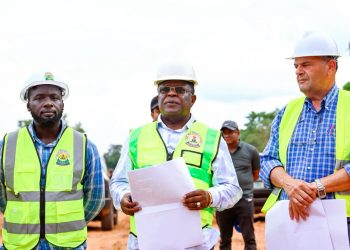
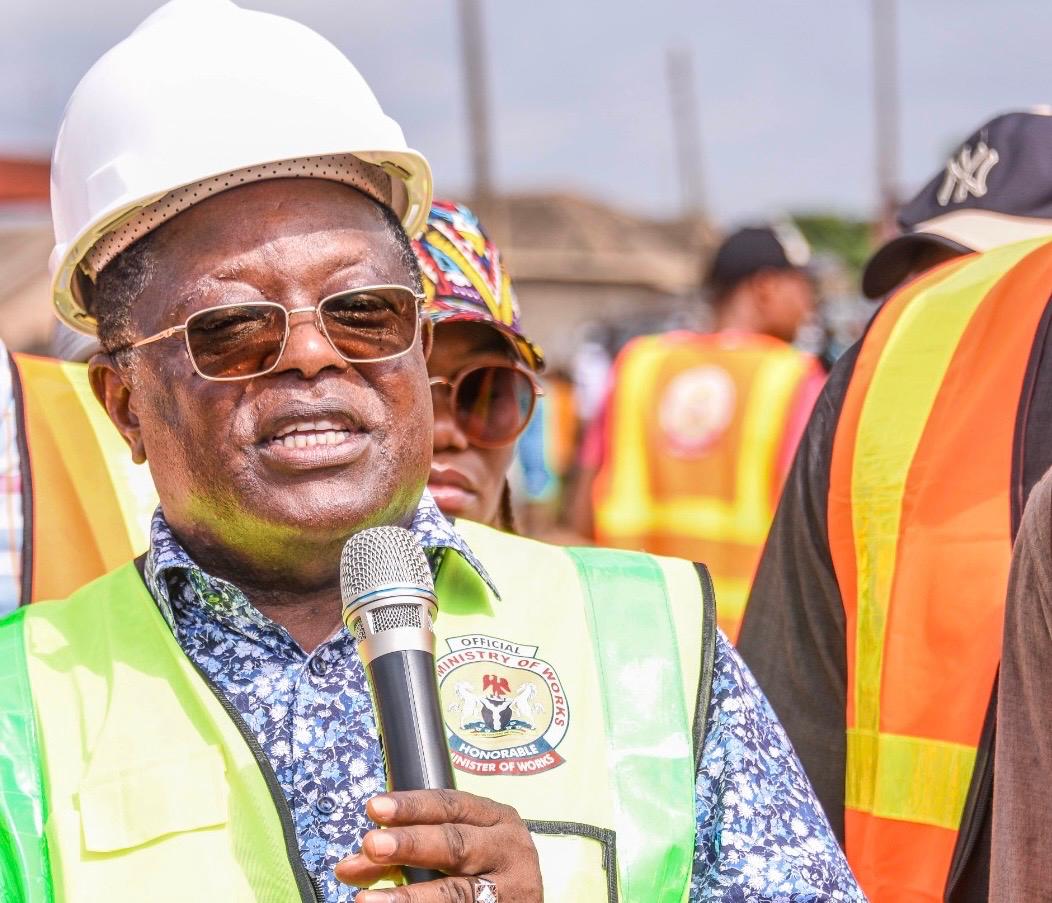
Beyond Ebonyi, the commentator highlighted Umahi’s contributions to infrastructure development across the Southeast in his current capacity as Minister of Works under President Bola Ahmed Tinubu.
Among the projects he mentioned were the Enugu-Port Harcourt Road, Eke-Obinagu Flyover, access roads to the Second Niger Bridge, rehabilitation and reconstruction works on the First Niger Bridge, and the proposed Calabar-Ebonyi-Enugu-Benue-Nasarawa-Abuja Superhighway.
He also referenced ongoing infrastructure works along the Enugu-Onitsha corridor, including solar streetlights, tree planting, reinforced concrete pavement and CCTV installations.
According to him, these projects demonstrate the Federal Government’s efforts to improve connectivity between the Southeast and other parts of the country.
The commentator further outlined Umahi’s political and public-service experience, noting that he had served as Deputy Governor of Ebonyi State, Governor of the state, Chairman of the Southeast Governors’ Forum, Senator representing Ebonyi South and, currently, Minister of Works.
He contrasted this with Obi’s principal experience in elected public office as Governor of Anambra State, insisting that their respective records should be assessed based on documented achievements and contributions to the region.
He also dismissed references to Umahi’s family and the death of Mary Habila in Obienyem’s article as unrelated to the central issues under discussion.
He cautioned against using Habila’s death as a political argument, noting that her parents had publicly spoken about her health condition while she was alive.
The commentator further criticised Obienyem’s use of expressions such as “Judas,” “mad dog,” “crude” and “nonsense,” describing them as personal attacks rather than substantive contributions to political discourse.
He maintained that the debate should focus on verifiable records of public service, inclusiveness and infrastructure development rather than personal insults.
Reiterating his position, the commentator questioned what Obi had delivered for the Southeast that could be compared with the infrastructure projects currently being executed across the region under the Tinubu administration through the Ministry of Works.
He argued that Umahi’s record, both as former Ebonyi governor and as Minister of Works, should form part of the assessment of his contributions to the Southeast.
He concluded by maintaining that Ebonyians had moved beyond political rhetoric and were committed to supporting President Tinubu’s administration through Umahi, urging Obienyem to reconsider his position and engage the issues with verifiable facts.