FG Reviews Macroeconomic Assumptions, Targets More Realistic National Budgets
The Federal Government has taken steps to strengthen Nigeria’s economic planning and budgeting process by ensuring that macroeconomic assumptions are based on credible data, realistic projections and transparent methodologies.
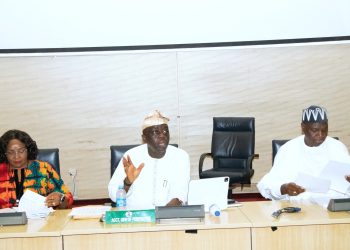
The Federal Ministry of Finance and the Federal Ministry of Budget and Economic Planning convened a Macroeconomic Data and Assumptions Validation Workshop on August 29, 2026, bringing together key fiscal and monetary data institutions across government.
The workshop focused on improving the quality and reliability of the assumptions used in preparing the Medium-Term Expenditure Framework/Fiscal Strategy Paper (MTEF/FSP) and the annual national budget.
A review of previous budget cycles revealed significant gaps between some of the assumptions used by government and actual economic outcomes, particularly in areas such as oil production and revenue.
Participants consequently agreed on measures aimed at strengthening economic forecasting, improving inter-agency coordination and reducing optimism bias in future budget projections.
One of the key resolutions was the establishment of a Standing Committee on Macroeconomic Data and Assumptions, which will be responsible for continuous validation and review of macroeconomic data and assumptions, with reports submitted to the Economic Management Team.
The workshop also approved plans to establish a central data repository to ensure that government institutions work with a single, consistent and reliable set of economic data and assumptions.
In addition, participants agreed to develop a unified national data reporting framework containing standard definitions for revenue, expenditure and borrowing. The framework is expected to improve consistency and transparency in government financial reporting.
The government will also strengthen coordination between fiscal and monetary authorities while improving the timeliness and quality of key national statistics, including data on employment, productivity and producer prices.
Another major resolution was that the assumptions underpinning the MTEF/FSP and annual budget would be subjected to stronger methodologies, sensitivity analysis and scenario testing before finalisation.
The Federal Government said the measures form part of its broader commitment to strengthening fiscal transparency, accountability and evidence-based economic management.
The initiative is expected to help government produce more realistic economic forecasts, improve budget credibility and support better decision-making in the management of the Nigerian economy.
The workshop underscored the importance of reliable information in economic management, with the principle that better data leads to better assumptions, better assumptions lead to better planning, and better planning should ultimately translate into improved economic outcomes for Nigerians.