Subsidy Removal, FX Reforms Saved Nigeria From Worse Crisis, Says FG
The Federal Government has said the economic reforms introduced by President Bola Ahmed Tinubu’s administration helped Nigeria avert a deeper fiscal and economic crisis, although it acknowledged that poverty and household welfare remain major challenges.
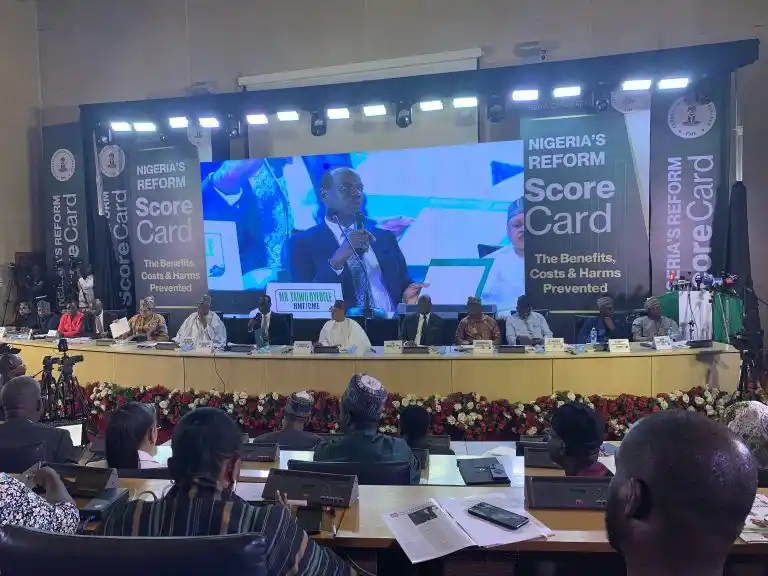
Minister of Finance and Coordinating Minister of the Economy, Taiwo Oyedele, disclosed this while presenting the government’s “Nigeria’s Reform Scorecard: The Benefits, Costs & Harms Prevention” at a media conference organised by the Federal Ministry of Finance.
Oyedele said the removal of fuel subsidy and the unification of the foreign exchange market had imposed significant costs on Nigerians but had also created fiscal space and prevented potentially more severe economic disruptions.
According to the scorecard, subsidy savings and the impact of the foreign exchange reforms generated ₦15.8 trillion in additional resources for the Federation between June 2023 and December 2025. The Federal Government’s share was estimated at ₦5.4 trillion, while ₦10.4 trillion accrued to states and local governments through the Federation Account.
The Minister said the Federal Government also generated an additional ₦3.1 trillion in independent revenue, while incremental borrowing during the period stood at ₦11.9 trillion, bringing its total incremental resources to approximately ₦20.4 trillion.
He explained that the resources were used alongside existing revenues to meet critical obligations, including wage adjustments, external debt servicing and infrastructure development.
Of the reported ₦30.64 trillion in incremental Federal Government expenditure, ₦9.39 trillion was spent on wage adjustments, minimum wage increases and allowances for public servants, ₦9.37 trillion on external debt servicing, while ₦6.5 trillion was committed to strategic infrastructure.
Oyedele stressed that the scorecard was not intended as a celebration of the reforms but as an assessment of their costs, benefits and the potential harm they prevented.
“We are not here to pretend these reforms were painless. We are here to show you honestly, and with the numbers, what it cost, the benefit they delivered, and the harm that they prevented,” he said.
The government said the assessment covered 25 economic indicators across fiscal sustainability, external stability, investment climate, social impact, growth and productivity.
It also cited improvements in several macroeconomic indicators, including inflation, foreign reserves, GDP growth and the capital market.
According to the presentation, headline inflation had fallen to 15.91 per cent, while gross foreign reserves stood at $52.5 billion. Net reserves were said to have risen from about $3 billion to $34.8 billion.
The Nigerian stock market’s capitalisation was also reported to have increased from approximately ₦31 trillion to ₦150 trillion, while real GDP growth rose to 3.89 per cent, compared with a May 2023 baseline of 2.31 per cent.
The government further highlighted the increase in the national minimum wage from ₦30,000 to ₦70,000, student loans benefiting more than 1.5 million students, cash transfers to vulnerable households, subsidised mortgages and agricultural interventions.
However, Oyedele admitted that improvements in macroeconomic indicators had not yet translated sufficiently into better living conditions for all Nigerians.
“On food and household welfare, our assessment is candid. This remains work in progress,” he said, adding that poverty and household welfare recovery remained “unfinished business.”
He said the next phase of the reforms would focus on expanding social protection, improving agricultural interventions, strengthening public spending and ensuring that economic growth translates into tangible benefits for households.
The government also warned that Nigeria could have faced severe foreign exchange shortages, fuel scarcity and widespread salary arrears if the previous economic trajectory had continued.
Oyedele said the parallel-market premium over the official exchange rate, previously above 60 per cent, had fallen to below five per cent, while the government estimated that it could have exceeded 150 per cent without the reforms.
He also argued that maintaining the former petrol subsidy regime could have resulted in severe scarcity, with petrol potentially selling for as much as ₦3,000 per litre on the black market despite an official price of ₦185.
Meanwhile, Minister of Information and National Orientation, Mohammed Idris, said the briefing was organised to provide Nigerians with factual information on the savings and resources generated following the removal of fuel subsidy.
Idris described subsidy removal as one of the administration’s most significant and difficult economic decisions, acknowledging the sacrifices it had imposed on households, businesses and communities.
He stressed the importance of transparency and accountability in sustaining public confidence in the reform programme, while urging the media to continue scrutinising government policies and holding public officials accountable.
“As the fourth estate of the realm, you have the great responsibility to critique government policies and programs. But in doing so, we must remember as always that we have a nation to keep,” Idris said.
He urged journalists to report government policies accurately and responsibly, stressing that the media had an important role in promoting national cohesion while ensuring accountability.